
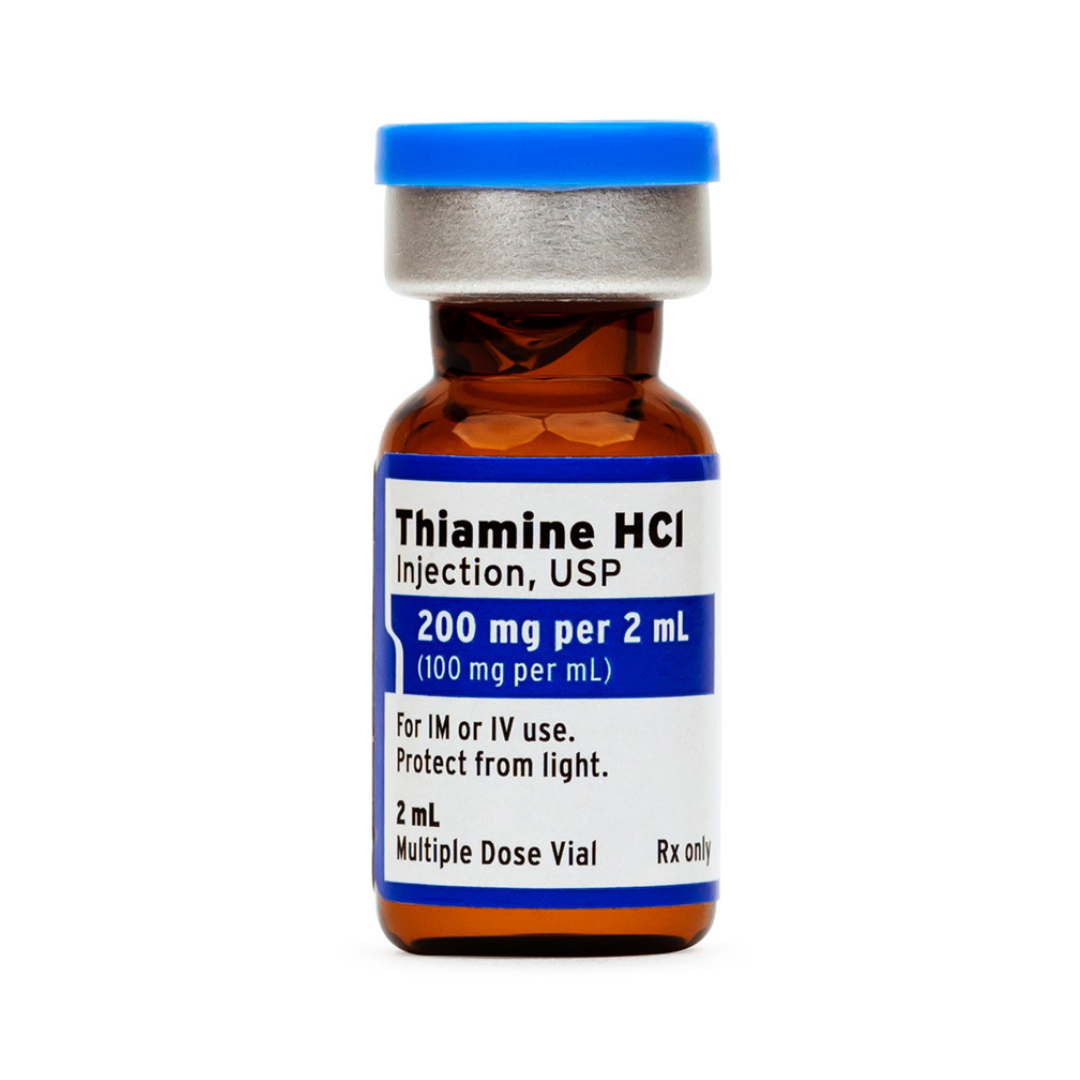
Product Overview
Thiamine HCl Injection is a prescription injectable formulation of Vitamin B1, an essential water-soluble vitamin required for energy metabolism, nerve function, and carbohydrate utilization. It is commonly used in the prevention and treatment of thiamine deficiency, which can result from conditions such as malnutrition, chronic alcoholism, gastrointestinal disorders, or prolonged parenteral nutrition.
Thiamine plays a key role in converting carbohydrates into energy and maintaining normal neurological function. Injectable administration ensures rapid and complete absorption, making it particularly valuable for patients who cannot tolerate oral supplementation or require urgent replenishment.
This medication is available by prescription only and must be administered under the supervision of a healthcare professional.
Dosage & Administration
General Dosing Information
Dosing of Thiamine HCl Injection is individualized based on the patient’s clinical condition, laboratory findings, and therapeutic response. The prescribing healthcare provider determines the appropriate dose, frequency, and duration.
Typical Adult Use (Examples)
- Administered intramuscularly (IM) or intravenously (IV)
- Frequency and dose depend on the severity of deficiency and patient response
- May be used short-term for acute deficiency or long-term for chronic supplementation
Administration Details
- Supplied as a sterile injectable solution
- Inspect solution prior to administration; do not use if cloudy or discolored
- Use aseptic technique during preparation and administration
- Rotate injection sites for IM use to reduce irritation
- Dispose of needles and syringes in approved sharps containers
Patients should not self-administer unless properly trained and authorized by their healthcare provider.
Treatment Duration & Monitoring
Duration of therapy varies based on the underlying cause and severity of deficiency:
- Acute deficiency may require short-term replenishment
- Chronic conditions may necessitate ongoing supplementation
Monitoring may include:
- Improvement in neurological symptoms such as fatigue, weakness, or neuropathy
- Laboratory assessment of thiamine levels, electrolytes, and metabolic function
- Observation for injection-site reactions or intolerance
Therapy should be adjusted based on clinical response and provider evaluation.
Mechanism of Action
Thiamine HCl Injection provides a bioavailable form of Vitamin B1, which:
- Acts as a coenzyme in carbohydrate metabolism, supporting energy production
- Supports nerve function and neurotransmitter synthesis
- Plays a role in cardiac and muscular function
- Prevents neurological complications associated with thiamine deficiency
Injectable delivery ensures rapid correction of deficiency and reliable systemic availability.
Contraindications & Precautions
Thiamine HCl Injection should be used with caution or avoided in patients with:
- Known hypersensitivity to thiamine or injection components
- Rare cases of anaphylactic reactions (particularly with IV administration)
This product is intended for medically supervised use only. Patients should be evaluated by a licensed healthcare professional prior to initiation.
Drug Interactions
Patients should inform their healthcare provider of all medications and supplements. Thiamine generally has a low risk of interactions, but concurrent use with certain diuretics or chemotherapeutic agents may require monitoring.
Adverse Reactions & Side Effects
Common
- Mild injection-site discomfort
- Local redness or swelling
Less Common
- Headache
- Nausea
- Rare hypersensitivity or allergic reactions
Adverse effects are usually mild and transient. Patients should seek medical attention for persistent, severe, or allergic reactions.
Pregnancy & Breastfeeding
Thiamine is an essential nutrient during pregnancy and lactation. Injectable supplementation should be used only when medically indicated and under supervision of a licensed healthcare provider.
Storage & Handling
- Store according to Angel Pharmacy compounding and dispensing guidelines
- Typically stored at controlled room temperature or as directed
- Protect from light
- Do not freeze unless specified
- Keep out of reach of children and pets
Unused or expired medication should be disposed of according to pharmacy or healthcare facility protocols.
Important Notice
This information is provided for educational purposes only and does not replace professional medical advice. All dosing, administration, and treatment decisions must follow the instructions of the prescribing healthcare provider.




Reviews
There are no reviews yet.