
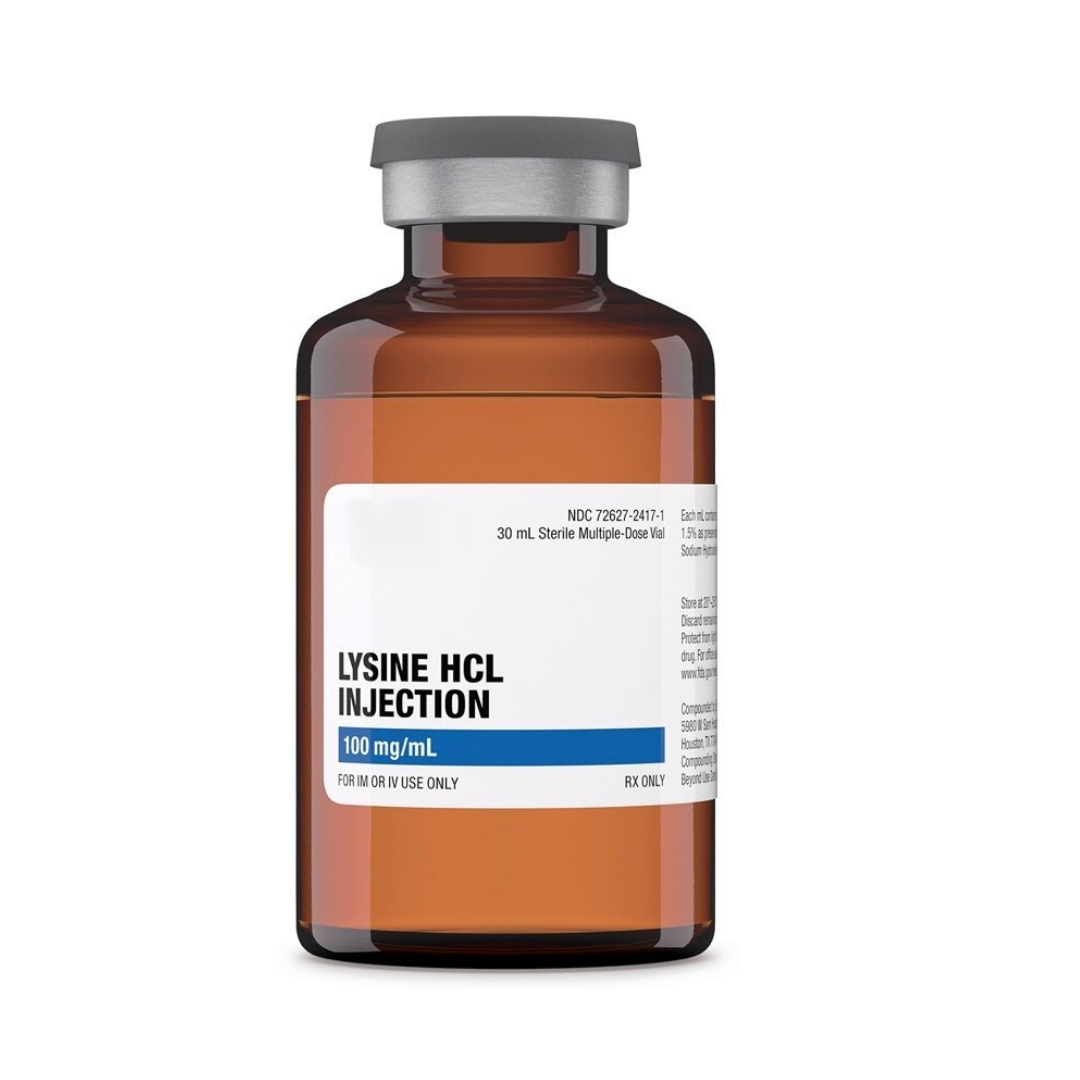
Product Overview
Lysine HCl Injection is a prescription injectable formulation of L-lysine hydrochloride, an essential amino acid required for protein synthesis, tissue repair, immune function, and metabolic balance. Because lysine cannot be synthesized by the human body, adequate intake is necessary for normal growth and physiological function.
Injectable lysine provides direct systemic availability, making it particularly useful in patients with nutritional deficiencies, increased metabolic demand, malabsorption syndromes, or during periods of recovery and stress. This medication is available by prescription only and must be administered under licensed healthcare supervision.
Dosage & Administration
General Dosing Information
Dosing of Lysine HCl Injection is individualized based on the patient’s clinical condition, nutritional status, and therapeutic goals.
Typical Adult Use (Examples)
- Administered intravenously (IV) or intramuscularly (IM)
- Dose and frequency depend on nutritional requirements, metabolic demand, and clinical response
- Common clinical uses include:
- Amino acid supplementation in deficiency states
- Support during illness, injury, or post-operative recovery
- Adjunctive nutritional support in patients with malabsorption or inadequate intake
Administration Details
- Supplied as a sterile injectable solution
- Inspect solution prior to use; do not use if cloudy, discolored, or containing particulate matter
- Use aseptic technique during preparation and administration
- Administer IV slowly as directed to minimize adverse reactions
- Rotate IM injection sites to reduce local irritation
- Dispose of needles and syringes in approved sharps containers
Patients should not self-administer unless properly trained and authorized by their healthcare provider.
Treatment Duration & Monitoring
Treatment duration depends on the patient’s nutritional needs and underlying condition:
- Short-term supplementation during acute illness or recovery
- Longer-term support in chronic deficiency or increased metabolic demand
Monitoring may include:
- Clinical assessment of nutritional status, recovery progress, and tolerance
- Observation for injection-site reactions or metabolic intolerance
Therapy should be adjusted based on clinical response and healthcare provider evaluation.
Mechanism of Action
Lysine HCl Injection supports physiological function by:
- Serving as a building block for protein synthesis and tissue repair
- Supporting collagen formation, contributing to skin, bone, and connective tissue health
- Playing a role in immune system function and antibody production
- Assisting in calcium absorption and nitrogen balance
Injectable administration ensures rapid and complete bioavailability, particularly in patients with compromised oral absorption.
Contraindications & Precautions
Lysine HCl Injection should be used with caution or avoided in patients with:
- Known hypersensitivity to lysine or formulation components
- Severe renal or hepatic impairment without appropriate monitoring
- Pre-existing metabolic or amino acid disorders
This product is intended for medically supervised use only.
Drug Interactions
Patients should inform their healthcare provider of all medications and supplements. Potential considerations include:
- Concurrent amino acid or parenteral nutrition therapies (dose adjustments may be required)
- No significant drug interactions have been commonly reported, but clinical monitoring is advised
Adverse Reactions & Side Effects
Common
- Mild injection-site discomfort or irritation
Less Common
- Nausea or gastrointestinal upset
- Dizziness
- Rare hypersensitivity reactions
Adverse effects are generally mild and transient. Patients should seek medical attention for persistent or severe symptoms.
Pregnancy & Breastfeeding
Lysine is a naturally occurring essential amino acid; however, injectable supplementation during pregnancy or breastfeeding should be used only when medically indicated and under healthcare provider supervision.
Storage & Handling
- Store according to Angel Pharmacy compounding and dispensing guidelines
- Typically stored at controlled room temperature
- Protect from light
- Do not freeze
- Keep out of reach of children and pets
Unused or expired medication should be disposed of according to pharmacy or healthcare facility protocols.
Important Notice
This information is provided for educational purposes only and does not replace professional medical advice. All dosing, administration, and treatment decisions must follow the instructions of the prescribing healthcare provider.


Reviews
There are no reviews yet.